|
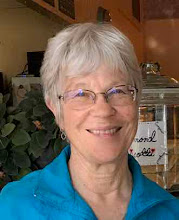
| Me, Norma Jean, PJ, Buz, Markee, and Fia |
What has brought on all this introspection has been the process that Smart Guy and I have been going through for a month or so now. When I went through the death doula training process, I learned about something called an "advance directive" for the end of one's life. Although back in the early 2000s we had gone to a lawyer and written out our wills, including a health directive, since then we have moved from Colorado to Washington state, and more specifically to Whatcom County, the most northwest county in the nation, right next to the Canadian border.
It's different here than in Colorado. The Whatcom Alliance for Health Advancement (WAHA) has developed quite a good process to consolidate information so that if someone is suddenly taken ill or is in an accident and cannot speak for him- or herself, one's wishes can be on file and known to everyone. It all started with the two of us attending a sparsely attended seminar on the process and given some forms to peruse. A few days later, we received a followup call from one of their volunteers to offer us a private meeting with a facilitator who would help us decide how to fill out the forms. Those 7 pages are filled with difficult questions and require a good deal of thought. (You can see the forms on their website, if you're wondering what's involved.)
Last week we had an hour-and-a-half session with Karen, a volunteer facilitator, who helped us understand the need for thoughtful reflection before finally filling them out. The first thing that needed to be done is to declare another person or persons to be our Health Care Agents. We of course first chose each other, but I also listed my sister and a friend as my second and third agents, in case my first one would not be available.
Then we spent most of the time discussing our desires for life-prolonging treatments. I learned that almost half of us will not be able to make these decisions for ourselves, when the time comes. That is the reason for the extensive queries on the forms. These are all things that I've thought about, but I never considered that I might not be conscious or able to tell someone whether to stop treatment or not. And when that time might be.
Karen suggested that we think of what our own particular "line in the sand" would be. If I have a stroke and cannot communicate but am still mentally all there, what do I want to happen? If I'm in a car accident and am unconscious with severe head injuries, how long do I want them to keep me alive? It's all so confusing, so for the past week I've been going over these options in my head. Here's the kicker:
If I reach a point where my doctors feel it is reasonably certain that I will not recover my ability to interact meaningfully with myself, my family, friends, and environment, I want to stop or withhold all treatments that might be used to prolong my life.That's pretty straightforward, and I can agree to that. But then I must define what "to interact meaningfully" means to me. That has been the hard part. I think I've finally decided that if I am not conscious, then let me go. But how long to wait for recovery? If I am in a coma, how long do I want them to wait before they stop? Some people have been in a coma for years and then recovered.
Well, I finally figured that part out, for me anyway. If I were younger, I might want to wait longer, but two weeks is enough time. It's not like I will be dying prematurely, whenever that occurs, because I'm already old. Maybe not OLD old quite yet, but that's not too far into the future. None of us knows when the time will come for each of us, but considering all these options has been eye-opening for me. I don't have to decide it for all time, but simply consider what I'd like to happen if it occurred right now, today.
In another week, we will meet once again at WAHA to have our forms witnessed by two people who are not related to us and have them notarized. WAHA then will make copies for us to distribute to everyone who needs them and puts a copy on file at the local hospital. I'll get a copy to give to my doctor when I see him next, and Karen suggested we let him know we'd like a little extra time to go over it.
I was so impressed with Karen and asked her what is entailed in becoming a facilitator. She told me that they have an extensive training program, and I asked her to sign me up. This is something I'd really like to do: help other people consider what their own "line in the sand" might be, and help other people to think about end-of-life choices. When I attended the death doula training, I realized that much of what they do is for after a person dies, what to do with the body, arranging a vigil, that sort of thing. This might be more in line with my abilities. We'll see.
While I've been casting about, wondering what adventurous activity I might take up next, now that skydiving is fading into the past, it never occurred to me that it might not be a physical thing. After all, there is at least ONE big adventure in my future, and that's learning to leave behind mortality. Who knows what adventure might be awaiting me on the other side? One day I'll find out.
Until then, I'll continue to live my life every day, to the fullest that I can. My world is certainly wide open today. My friends, my partner, my family, my garden — all precious pieces of my life that I am able to appreciate and cherish just a little bit more because of filling out this form and thinking about what choices I will make for the end of my life.
Sorry that this post is not more uplifting, but introspection tends to make me a little less exuberant and flippant. I needed to write this all down so I could get my virtual arms around it. Done, and done. My post is finally finished, and even though it's not a fun post, I do hope you will consider these questions for yourselves. We'll all get there, one way or another.